

Locating the “I” on the Map Drawn By Literature
By Narrator’s Club co-founder Emma Tonoyan
Go talk to this girl, she seems cool. No, I will just find her on Instagram. Let’s go to grandma and ask for the recipe of cookies. I already googled it. Oh, Isa watched this movie, let me ask if it’s nice. Rotten Tomatoes gave it 71%.
A subtle transformation from human-to-human interaction to a machine-human one. And thanks to it, we have leading medical devices, access to space, and a lot of abs workouts. Yet there is a space that I entered where the old, good connection was the only craving in my system.
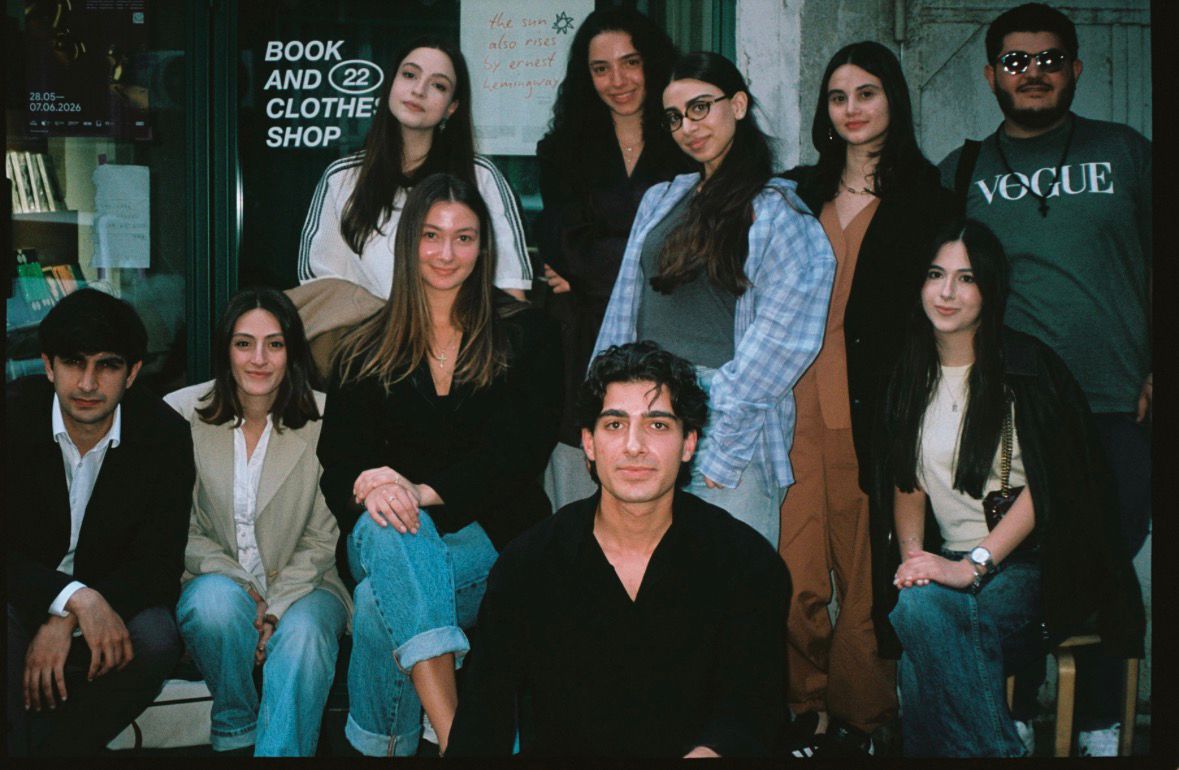
Thirty pages into The Gambler by Fyodor Dostoevsky, I found myself convincing my friend Nane to read it, just so that we could gossip. There, I wondered if there are book gossipers like us anywhere else in the world. The idea for the Narrators’ Club was born. What started simply as a forum to discuss a book, even if it would be only the two of us, expanded into a space for the mere concept of human-to-human interaction to exist in a world with so many substitutes for it.
As the world is changing, we gain opportunities to be unprecedentedly close to others’ lives: vlogs of your country’s war zone, where you see your friends sacrifice their lives for a piece of historic land; insights into the lives of the statistical minority of successful people that inevitably rush you to be disappointed in your own… This apparent closeness makes it more challenging to stay in touch with your own reality and daily routine.
Books—pages with letters forming words, words forming sentences, sentences forming imagination, expand the frame through which we see the world. Taking the non-ideal and making it even realer by discussing it with so many different narrators of their worlds could be the foundation of our time of living. A book becomes as many as there are narrators with us.
I believe that with the right questions, reading becomes a journey of understanding yourself and the identity one carries, alongside crafting the missing pieces and expanding the “I”. The Narrators’ Club is meant to be a space—neither a club nor homework. A space to shield humane communication around books, movies, identities, movement—because who are we if there is no one there to identify us?
As much as our generation is trying to complete life on its own to avoid dependence, we are missing out on something undeniable: the Homo sapiens that we are, with the need for society, opinions, acceptance, empathy. Yet that does not exist anymore—not at the scale that past generations have experienced—but it can exist in handpicked groups, or within you and your friend whom you call to gossip about a book.
So if there is anything I want you to take from these letters that formed words, later sentences, and now imagination, it is the duality of being open to hear someone else, and yet having your own voice to speak. Because if there were no such people, none of our discussions would make it through. Each Narrator we have encountered has heard the absurd, felt uncomfortable, rejected, laughed, agreed—but never closed the door on another Narrator’s face.
At the Narrator’s Club, we practice expressing ourselves and our opinions, and we seek connection, both to one another and to the books that carry the threads into our imagination. Whoever picks up that thread and spins it around their fingers is welcome to join.


