

Mira: Please introduce yourself in a couple of sentences, where are you from, what do you do, and what is important to you?
Ahmed: My name is Ahmed Abu Ajwa. I’m a photographer and filmmaker living in the Gaza Strip. I began my career in 2018, and I’ve accompanied many international journalists from major networks like Sky News English, NOS, and ARD. What’s important to me is to document the human condition in Gaza to highlight how people, especially women and children, strive to survive amid unimaginable circumstances.
Mira: What made you pursue photography?
Ahmed: Through my photography, I try to focus on the small details of daily life moments that may seem ordinary at first glance, but in Gaza, they often carry a silent pain. Even in the most basic scenes, there is a story worth telling. I’ve always been drawn to these moments, and photography became my way of preserving them and sharing them with the world.
Mira: What makes a great photograph?
Ahmed: A great photograph, to me, is one that captures the resilience of people not just their suffering. While images of victims and violence are powerful, I prefer to document human moments: children playing, people celebrating, someone planting flowers among rubble. These scenes are a testament to our perseverance and send a message: we are still here, still trying, still dreaming.
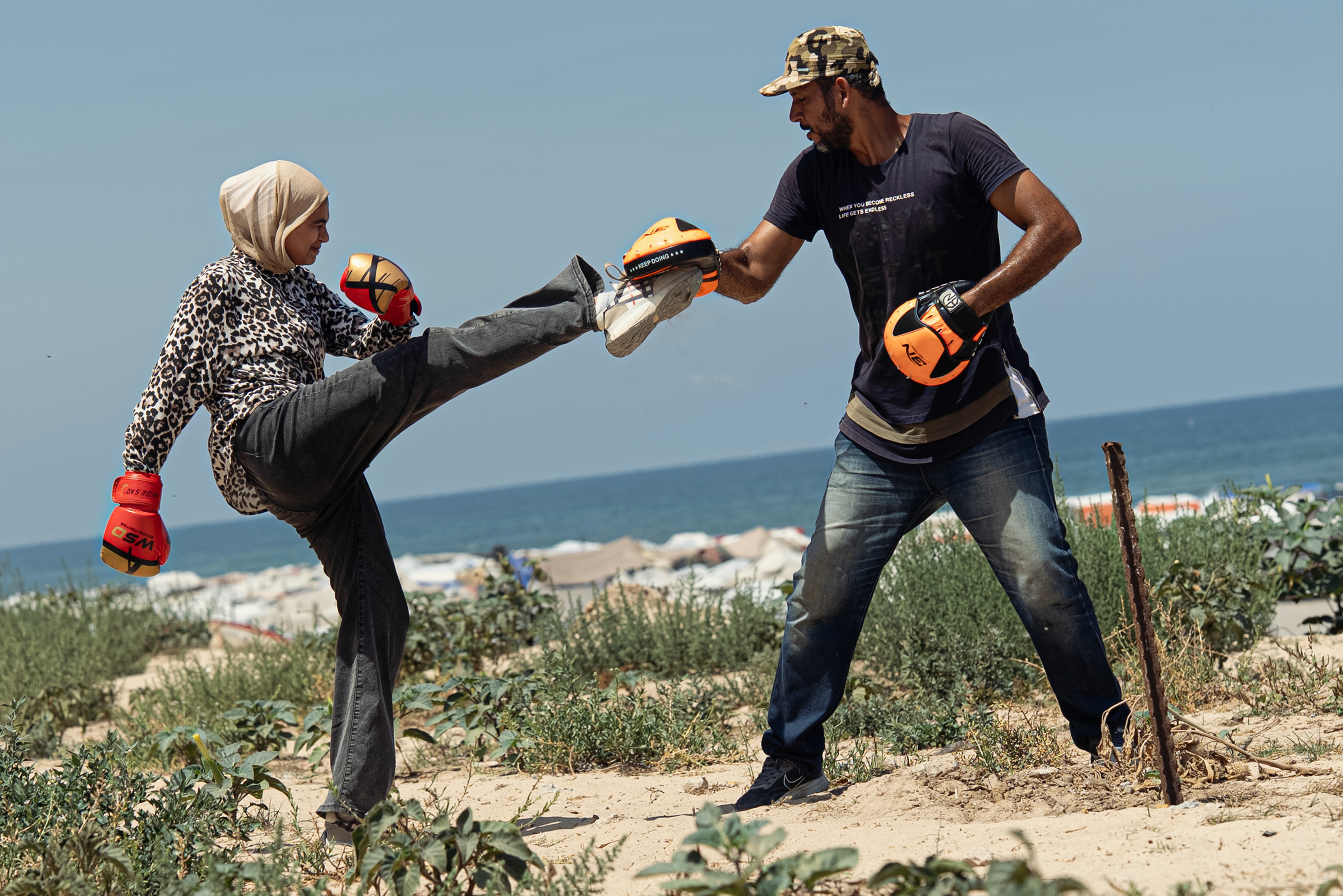
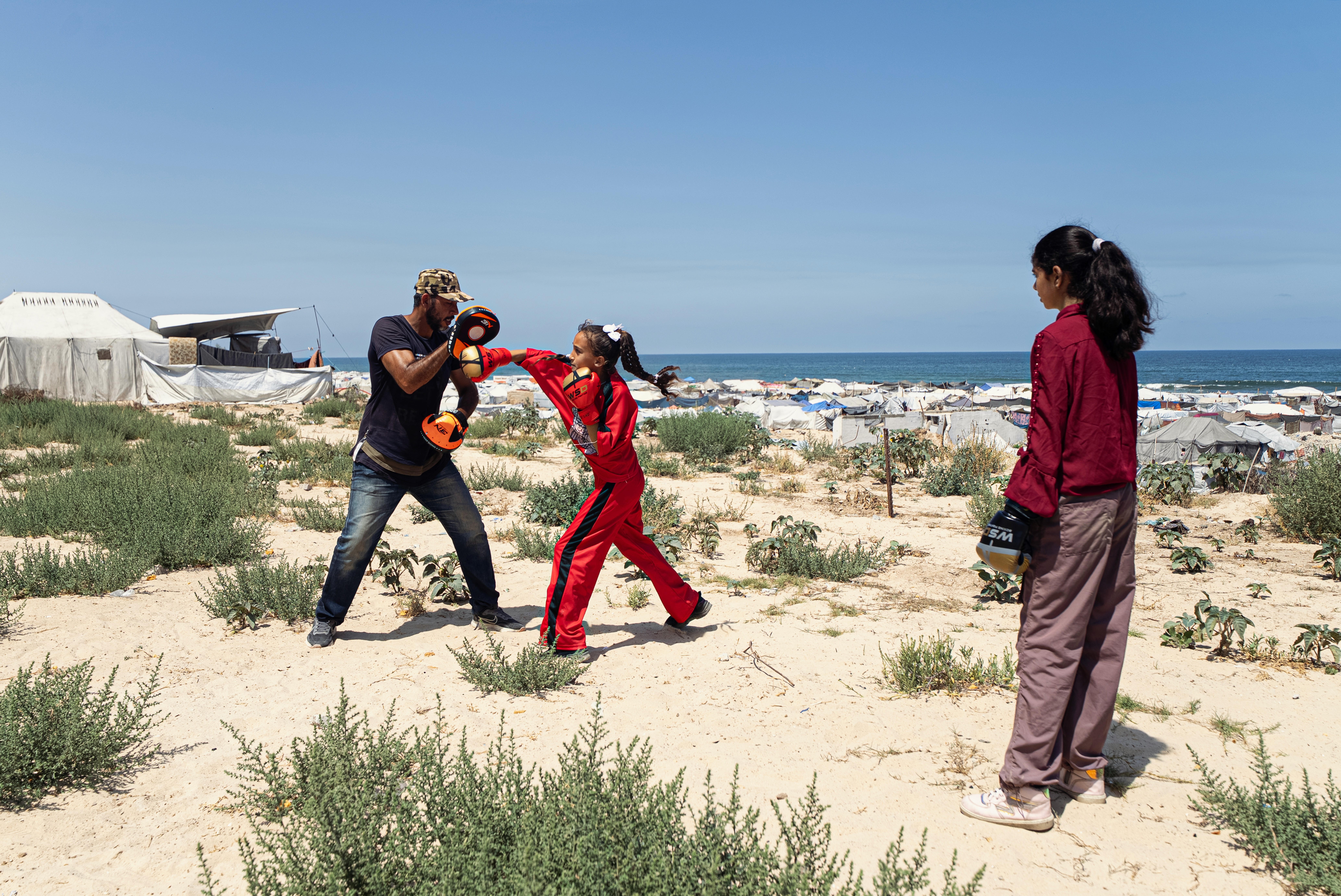
Mira: You posted a series of pictures that show young girls and women boxing in an open field in Gaza. Tell me a bit about these girls and how they came to boxing.
Ahmed: I was struck by the determination of the Palestinian female boxers, who continued training despite everything, dreaming of participating in the 2028 Tokyo Olympics. It was a scene of determination and beauty amidst the devastation. Despite the lack of facilities, equipment, and safety, they kept going, showing the world what it means to resist through sport.
Mira: You live in Gaza. What is your reality like these days? What keeps you going?
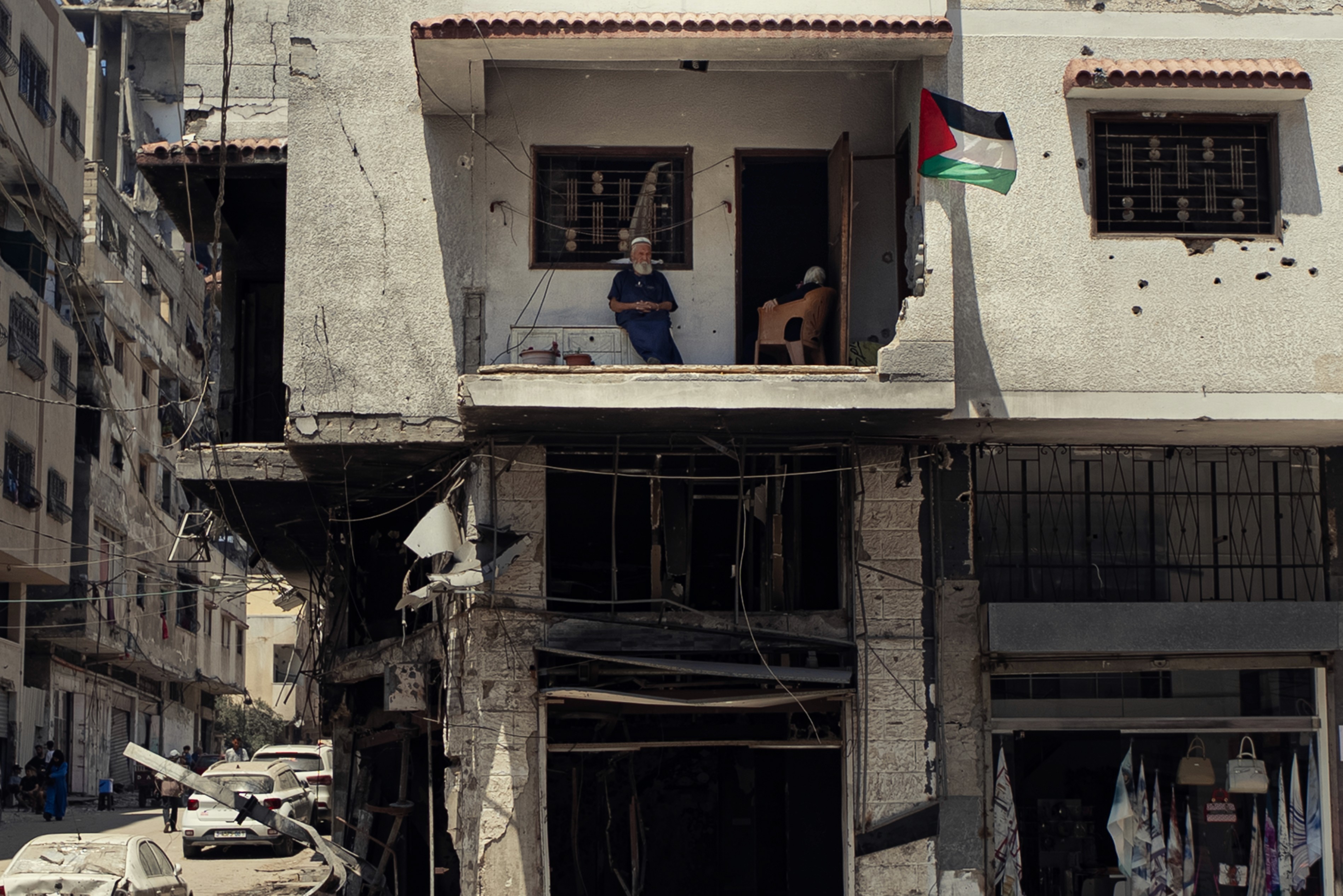
Ahmed: Today in Gaza begins with the search for water and food. Life is extremely dangerous, and I’ve been displaced, lived in tents and crowded houses, and documented war while trying to survive it myself. I often work without electricity or internet. Yet I insist on continuing to send out photos and videos. I feel it’s my duty to keep the world informed. What keeps me going is the belief that we deserve another chance at life.
Mira: What story would you like to share with the world?
Ahmed: One moment that stayed with me was standing in line for water. A woman pushed through and a man yelled: “Where is your husband or son?” She replied: “My husband is a prisoner, and my only son was killed yesterday. I have no one left but myself.” That silence was louder than any explosion. I want the world to hear these stories not just of loss, but of strength in the face of it.
Mira: Your photographs focus on the children of Palestine, the youth. How do they instill hope in you?
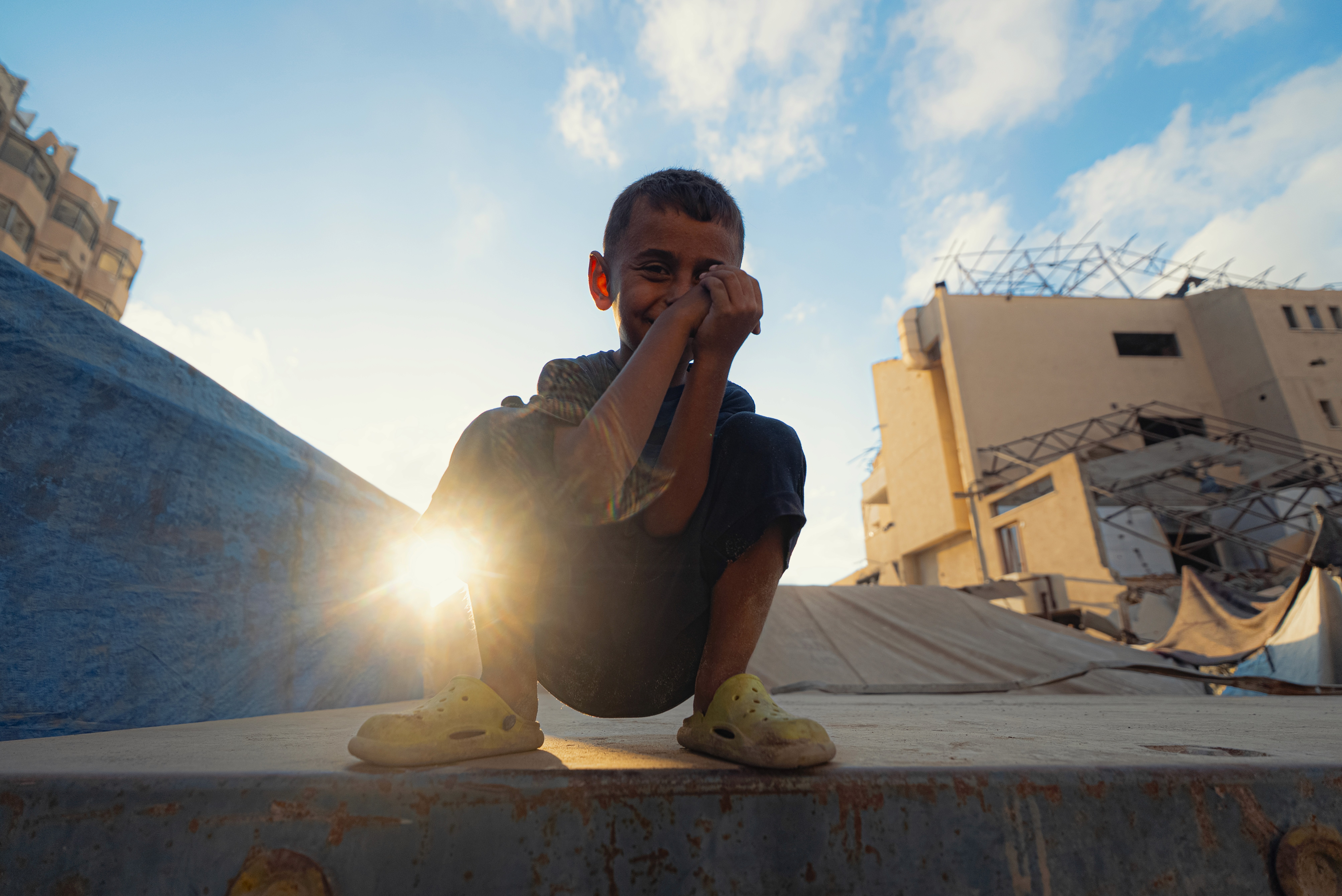
Ahmed: Children are the future, and in Gaza, that future has been lost to war. But I focus on them because they still dream. I’ve seen children working to support their families, selling balloons among rubble, or playing by the sea even when it’s dangerous. Despite everything, they still try to live. That determination is where I find hope.
Mira: What is your favorite place in Gaza? Your favorite place to take photos?
Ahmed: The sea in Gaza has always been my personal sanctuary. Not just as a photographer, but as a human being seeking a breath of air. For me, the sea is a symbol of the freedom we’ve been denied. Every photo I take there is an attempt to escape the narrowness of reality and capture the vastness of possibility.

Mira: What makes great leadership?
Ahmed: Great leadership, in my view, means standing by your people in the hardest times. It means listening, protecting, and giving hope. In Gaza, where leadership often fails, I see acts of quiet leadership among ordinary people mothers caring for their families in tents, youth organizing aid for neighbors. That’s real leadership.
Mira: What are the elements of a just, peaceful community?
Ahmed: A just community is one where people have access to basic rights: water, food, education, and dignity. Peace isn’t just the absence of war it’s the presence of opportunity. In Gaza, peace means lifting the siege, ending the occupation, and allowing people to live freely, to dream, to connect with the world.
Mira: How are you perceiving the global community right now?
Ahmed: I feel that the global community is watching, but not doing enough. Sometimes we feel forgotten. But at the same time, I’ve received messages from people around the world expressing solidarity and support. That gives me strength. My hope is that we, the youth of Gaza, will one day be seen not only as victims but as creators, leaders, and participants in a better future.